رادارهای پسیو (passive radar systems)

از انواعی از رادارها هستند که بدون اینکه از خود تشعشعاتی صادر کنند می توانند اهداف را شناسایی و ردیابی نمایند.


» معرفی :

سیستمهای راداری متداول از یک بخش فرستنده و دریافت کننده تشکیل می شوند که اغلب از یک آنتن برای ارسال و دریافت استفاده می کنند ، یک سیگنالی پالسی ارسال می شود و زمان برخورد آن به هدف و دریافت آن این اجازه را می دهد تا فاصله و مشخصات هدف محاسبه شود.

در سیستم های رادار پسیو (passive radar system) هیچ نوع فرستنده اختصاصی وجود ندارد در عوض سیستم دریافت کننده از فرستنده سومی در محیط بهره می گیرد ، و اختلاف زمان بین سیگنالی که مستقیما از فرستنده دریافت میشود و سیگنالهایی را که در اثر تشعشع دریافت می شود را اندازه می گیرد. این کار اجازه می دهد تا وضعیت هدف و تحرک آن مشخص گردد(bistatic range) .همچنین در فاصله ایستا ، یک رادار پسیو  به صورت رمز تغییرات داپلری بازتاب و همچنین جهت حضور را نیز نمایان می کند.

این مشخصات کمک می کند که مکان ،جهت حرکت و سرعت هدف توسط کامپیوتر محاسبه شود. در برخی موارد ،چندین فرستنده و یا گیرنده بکار می روند تا چندین محاسبه مستقل از فواصل  bistatic داشته باشیم ،تغییر تن صدای خودرو یا موتور جنگنده  در نهایت دقت در یافتن هدف نهایی را ساده تر می کند.

اصطلاح "رادارهای پسیو" گاهی اوقات به صورت اشتباه بکار می روند برای سنسورهای پسیوی که توسط امواج رادیویی ارسالی هواپیماها را شناسایی می کنند(مثل رادارها،ارتباطات ،یا دستگاه کشف و رمز خودکار مکالمات) .اما ، این سیستم ها از انرژی بازتابی استفاده نمی کنند و باید آنها را سیستم های ESM نامگذاری نمود. نمونه های شناخته شده ی آنها عبارتند از : سیستمهای TAMARA and VERA چک و اسلواکی و سیستمهای Kolchuga کشور اکراین .


» تاریخچه :

تدبیر ساخت رادارهایی که آشکارسازی را بوسیله امواجی که از هدف ساطع می شوند انجام می دهند ایده جدیدی نیست.اولین آزمایشات در سال 1935 توسط رابرت واتسون وات(Robert Watson-Watt) در انگلستان صورت پذیرفت . او توانست یک بمب افکن را توسط امواج کوتاه در 12 کیلومتری تشخیص دهد.


رادارهای اولیه همگی ایستا(bistatic) بودند زیرا تکنولوژی به اندازه ای پیشرفت نکرده بود تا آنتن را قادر نماید تا از فرستندگی به گیرندگی سوئیچ نماید. کشورهای زیادی از سیستمهای ایستا(bistatic) در شبکه های دفاع هوایی استفاده می کردند.

به صورت مثال در اوایل سال 1930  انگلستان سیستم خانه زنجیره ای (CHAIN HOME) را راه اندازی کرد. فرانسوی ها  از یک رادار ایستای (bistatic)  موج دائم (CW) در سیستمی به نام(fence) استفاده کردند. شوروی  سیستم (RUS-1) را ساخت و ژاپن(Type A) را ساخت.


آلمانی ها از سیستم(bistatic) در طول جنگ جهانی دوم استفاده کردند. این سیستم صنایع (Kleine Heidelberg) نامیده می شد که مثل دریافت کننده های ایستا عمل می کرد و از سیستم داخلی رادارهای انگلیسی برای آشکار نمودن هواپیماها در بخش های جنوبی دریای شمال استفاده می کرد .


در سال  1936 رادارهای تک ایستایی(Bistatic) راهی را پیش رو نهاد برای استفاده از سیستم های راداری دو ایستایی(monostatic) با استفاده از یک بهبود دهنده . سیستم های monostatic بسیار راحت تر بودند و آنها مشکلات سیستم های تک ایستایی را حل نمودند که بوسیله فرستنده ها و گیرنده های جدا تعریف می شد. همچنین تجهیزات سیستم های راداری هواپیماها کوچکتر گردید . در سال 1950 سیستمهای(bistatic) با خواص رادار پراکنده مجددا معرفی شدند ، براستی اولین استفاده از اصطلاح (bistatic) توسط (Seigel) در سال 1955 در گزارشش که درباره این خواص بود مطرح گردید.


آزمایشات در ایالات متحده به توسعه سیستم های (bistatic) کمک نمود،طراحی رادار (AN/FPS-23 fluttar) که یک (DEW) به معنای یک هشدار دهنده فاصله دور است در آمریکای شمالی صورت گرفت . این رادار یک موج مداوم  (bistatic) داشت که در 1955 ساخته شده بود و وظیفه آن آشکار سازی نفوذ دشمن توسط بمبرهایی که در ارتفاع پایین پرواز می کنند بود . رادارهای فلوتار (fluttar radars) برای پوشش شکاف های ارتفاع پائین و رادراهای جستجو گر (monostatic surveillance radars) به جای دیده بان ها استفاده می شدند. رادارهای فلوتار به مدت 5 سال در شرکت خط شبنم(DEW line) در حال توسه و ساخت بودند .


» اصول اولیه کار

در رادارهای معمولی، زمان ارسال پالس و دریافت آن کاملا شناخته شده است و به رادار این اجازه را می دهد تا فاصله هدف به راحتی محاسبه شود و توسط یک فیلتر تطابق درصد سیگنال به نویز را مشخص نماید . یک رادار پسیو هیچ اطلاعاتی را به طور مستقیم دریافت نمی نماید ، از این رو باید از یک کانال اختصاصی (که کانال منبع نامیده می شود)استفاده نماید برای هر ارسال کننده ای که وجود دارد .

یک رادار پسیو از مراحل زیر استفاده می نماید :

منطقه تحت پوشش را برای دریافت امواج توسط دریافت کننده های دیجیتالی بدون نویز جستجو می نماید .

تولید امواج دیجیتال برای تشخیص جهت دریافت امواج و فاصله ارسال شده و قدرت منبع ارسال کننده .

فیلترینگ انطباقی برای جداسازی هر سیگنال مستقیم ناخواسته در محدوده تجسس .

آماده سازی سیگنال مشخص شده برای ارسال کننده .

رابطه ضربدری برای کانال منبع با کانال های تجسس  برای مشخص کردن رنج بای استاتیک و داپلر هدف.

آشکار سازی با استفاده از طرح  میزان آلارم خطا (constant false alarm rate (CFAR))

ارتباط و پیگیری هدف در فضای داپلر تحت پوشش که به نام پیگیری خطی(line tracking) شناخته شده است .

ارتباط و ترکیب پیگیری خطی از هر ارسال کننده به شکل ارزیابی نهایی از موقعیت و سمت و سرعت یک هدف به نمایش در می آید.


» سیستم دریافت

از آنجا که این نوع از رادارها به پالس های امواج دریافتی گوش می دهند و نتیجه را به صورت نهایی در اختیار قرار می دهند پس سیستم دریافت باید دارای مشخصه نویز پایین ، رنج فعالیت بالا و رنج خطی بالا باشد . بنابراین این سیستم بسیار به نویز حساس است . رادارهای پسیو دریافت کننده های دیجیتالی بسیار حساسی هستند که یک خروجی دیجیتال و یک موج نمونه می دهند.


» شکل موج دیجیتال

اکثر سیستم های رادار پسیو از مجموعهء چند آنتن و عناصر دیجیتال کننده تشکیل شده اند. این موضوع به ما اجازه می دهد تا جهت امواج رسیده به رادار محاسبه شوند .


» مزایا و معایب این نوع رادارها

مزایا :

پایین بودن هزینه آماد

پایین بودن هزینه نگهداری و منتنس به خاطر نداشتن ارسال کننده

پنهانکاری راداری ، به علت نداشتن امواج ارسالی

اندازه کوچکتر نسبت به رادارهای اکتیو

امکان مقابله و ردیابی جنگنده های پنهانکار

قابلیت به روز کردن سریع اطلاعات راداری

بسیار سخت و غیر قابل نفوذ و هک شدن(jamming)

غیر قابل ردیابی در مقابل موشک های ضد تشعشع

 معایب :

 هنوز این تکنولوژی کامل نیست

در صورت زیاد بودن نویز محیط قابل اعتماد نیست

پیچیده بودن سیستم کاری

عملکرد دو بعدی (2D)


برای کسب اطلاعات بیشتر به منبع زیر مراجعه بفرمایید.


Passive radar

Passive radar systems (also referred to as passive coherent location and passive covert radar) encompass a class of radar systems that detect and track objects by processing reflections from non-cooperative sources of illumination in the environment, such as commercial broadcast and communications signals. It is a specific case of bistatic radar, the latter also including the exploitation of cooperative and non-cooperative radar transmitters.


Introduction

Conventional radar systems comprise a collocated transmitter and receiver, which usually share a common antenna to transmit and receive. A pulsed signal is transmitted and the time taken for the pulse to travel to the object and back allows the range of the object to be determined.


In a passive radar system, there is no dedicated transmitter. Instead, the receiver uses third-party transmitters in the environment, and measures the time difference of arrival between the signal arriving directly from the transmitter and the signal arriving via reflection from the object. This allows the bistatic range of the object to be determined. In addition to bistatic range, a passive radar will typically also measure the bistatic Doppler shift of the echo and also its direction of arrival. These allow the location, heading and speed of the object to be calculated. In some cases, multiple transmitters and/or receivers can be employed to make several independent measurements of bistatic range, Doppler and bearing and hence significantly improve the final track accuracy.


The term "passive radar" is sometimes used incorrectly to describe those passive sensors that detect and track aircraft by their RF emissions (such as radar, communications, or transponder emissions). However, these systems do not exploit reflected energy and hence are more accurately described as ESM systems. Well known examples include the Czech TAMARA and VERA systems and the Ukrainian Kolchuga system.


History

The concept of passive radar detection using reflected ambient radio signals emanating from a distant transmitter—is not new. The first radar experiments in the United Kingdom in 1935 by Robert Watson-Watt demonstrated the principle of radar by detecting a Handley Page Heyford bomber at a distance of 12 km using the BBC shortwave transmitter at Daventry.


Early radars were all bistatic because the technology to enable an antenna to be switched from transmit to receive mode had not been developed. Thus many countries were using bistatic systems in air defence networks during the early 1930s. For example, the British deployed the CHAIN HOME system; the French used a bistatic Continuous Wave (CW) radar in a "fence" (or "barrier") system; the Soviet Union deployed a bistatic CW system called the RUS-1; and the Japanese developed a bistatic CW radar simply called "Type A".


The Germans used a passive bistatic system during World War II. This system, called the Kleine Heidelberg device, was deployed at seven sites (Limmen, Oostvoorne, Ostend, Boulogne, Abbeville, Cap d'Antifer and Cherbourg) and operated as bistatic receivers, using the British Chain Home radars as non-cooperative illuminators, to detect aircraft over the southern part of the North Sea.


Bistatic radar systems gave way to monostatic systems with the development of the synchronizer in 1936. The monostatic systems were much easier to implement since they eliminated the geometric complexities introduced by the separate transmitter and receiver sites. In addition, aircraft and shipborne applications became possible as smaller components were developed. In the early 1950s, bistatic systems were considered again when some interesting properties of the scattered radar energy were discovered, indeed the term "bistatic" was first used by Seigel in 1955 in his report describing these properties.


Experiments in the United States led to the deployment of a bistatic system, designated the AN/FPS-23 fluttar radar, in the North American Distant Early Warning (DEW) Line. The fluttar radar was a CW fixed-beam bistatic fence radar developed in 1955 to detect penetration of the DEW line by low-flying bombers. The fluttar radars were designed to fill the low-altitude gaps between SENTINEL monostatic surveillance radars. Fluttar radars were deployed on the DEW line for approximately five years.


The rise of cheap computing power and digital receiver technology in the 1980s led to a resurgence of interest in passive radar technology. For the first time, these allowed designers to apply digital signal processing techniques to exploit a variety of broadcast signals and to use cross-correlation techniques to achieve sufficient signal processing gain to detect targets and estimate their bistatic range and Doppler shift. Classified programmes existed in several nations, but the first announcement of a commercial system was by Lockheed-Martin Mission Systems in 1998, with the commercial launch of the Silent Sentry system, that exploited FM radio and analogue television transmitters.


Typical illuminators

Passive radar systems have been developed that exploit the following sources of illumination:


Analog television signals

FM radio signals

GSM base stations

Digital audio broadcasting

Digital video broadcasting

Terrestrial High-definition television transmitters in North America

Satellite signals have generally been found to be inadequate for passive radar use: either because the powers are too low, or because the orbits of the satellites are such that illumination is too infrequent. The possible exception to this is the exploitation of satellite-based radar and satellite radio systems.


Principle

In a conventional radar system, the time of transmission of the pulse and the transmitted waveform are exactly known. This allows the object range to be easily calculated and for a matched filter to be used to achieve an optimal signal-to-noise ratio in the receiver. A passive radar does not have this information directly and hence must use a dedicated receiver channel (known as the "reference channel") to monitor each transmitter being exploited, and dynamically sample the transmitted waveform. A passive radar typically employs the following processing steps:


Reception of the direct signal from the transmitter(s) and from the surveillance region on dedicated low-noise, linear, digital receivers

Digital beamforming to determine the direction of arrival of signals and spatial rejection of strong in-band interference

Adaptive filtering to cancel any unwanted direct signal returns in the surveillance channel(s)

Transmitter-specific signal conditioning

Cross-correlation of the reference channel with the surveillance channels to determine object bistatic range and Doppler

Detection using constant false alarm rate (CFAR) scheme

Association and tracking of object returns in range/Doppler space, known as "line tracking"

Association and fusion of line tracks from each transmitter to form the final estimate of an objects location, heading and speed

These are described in greater detail in the sections below.


Generic passive radar signal processing scheme Receiver system

A passive radar system must detect very small target returns in the presence of very strong, continuous interference. This contrasts with a conventional radar, which listens for echoes during the periods of silence in between each pulse transmission. As a result, it is essential that the receiver should have a low noise figure, high dynamic range and high linearity. Despite this, the received echoes are normally well below the noise floor and the system tends to be externally noise limited (due to reception of the transmitted signal itself, plus reception of other distant in-band transmitters). Passive radar systems use digital receiver systems which output a digitized, sampled signal.


Digital beamforming

Most passive radar systems use simple antenna arrays with several antenna elements and element-level digitisation. This allows the direction of arrival of echoes to be calculated using standard radar beamforming techniques, such as amplitude monopulse using a series of fixed, overlapping beams or more sophisticated adaptive beamforming. Alternatively, some research systems have used only a pair of antenna elements and the phase-difference of arrival to calculate the direction of arrival of the echoes (known as phase interferometry and similar in concept to Very Long Baseline Interferometry used in astronomy).


Signal conditioning

With some transmitter types, it is necessary to perform some transmitter-specific conditioning of the signal before cross-correlation processing. This may include high quality analogue bandpass filtering of the signal, channel equalization to improve the quality of the reference signal, removal of unwanted structures in digital signals to improve the radar ambiguity function or even complete reconstruction of the reference signal from the received digital signal.


Adaptive filtering

The principal limitation in detection range for most passive radar systems is the signal-to-interference ratio, due to the large and constant direct signal received from the transmitter. To remove this, an adaptive filter can be used to remove the direct signal in a process similar to active noise control. This step is essential to ensure that the range/Doppler sidelobes of the direct signal do not mask the smaller echoes in the subsequent cross-correlation stage.


In a few specific cases, the direct interference is not a limiting factor, due to the transmitter being beyond the horizon or obscured by terrain (such as with the Manastash Ridge Radar), but this is the exception rather than the rule, as the transmitter must normally be within line-of-sight of the receiver to ensure good low-level coverage.


Cross-correlation processing

The key processing step in a passive radar is cross-correlation. This step acts as the matched filter and also provides the estimates of the bistatic range and bistatic Doppler shift of each target echo. Most analogue and digital broadcast signals are noise-like in nature, and as a consequence they tend to only correlate with themselves. This presents a problem with moving targets, as the Doppler shift imposed on the echo means that it will not correlate with the direct signal from the transmitter. As a result, the cross-correlation processing must implement a bank of matched filters, each matched to a different target Doppler shift. Efficient implementations of the cross-correlation processing based on the discrete Fourier transform are usually used. The signal processing gain is typically equal to the time-bandwidth product, BT, where B is the waveform bandwidth and T is the length of the signal sequence being integrated. A gain of 50dB is not uncommon. Extended integration times are limited by the motion of the target and its smearing in range and Doppler during the integration period.


Target detection

Targets are detected on the cross-correlation surface by applying an adaptive threshold, and declaring all returns above this surface to be targets. A standard cell-averaging constant false alarm rate (CFAR) algorithm is typically used.


Line tracking

The line-tracking step refers to the tracking of target returns from individual targets, over time, in the range-Doppler space produced by the cross-correlation processing. A standard Kalman filter is typically used. Most false alarms are rejected during this stage of the processing.


Track association and state estimation

In a simple bistatic configuration (one transmitter and one receiver) it is possible to determine the location of the target by simply calculating the point of intersection of the bearing with the bistatic-range ellipse. However, errors in bearing and range tend to make this approach fairly inaccurate. A better approach is to estimate the target state (location, heading and speed) from the full measurement set of bistatic range, bearing and Doppler using a non-linear filter, such as the extended or unscented Kalman filter.


When multiple transmitters are used, a target can be potentially detected by every transmitter. The return from this target will appear at a different bistatic range and Doppler shift with each transmitter and so it is necessary to determine which target returns from one transmitter correspond with those on the other transmitters. Having associated these returns, the point at which the bistatic range ellipses from each transmitter intersect is the location of the target. The target can be located much more accurately in this way, than by relying on the intersection of the (inaccurate) bearing measurement with a single range ellipse. Again the optimum approach is to combine the measurements from each transmitter using a non-linear filter, such as the extended or unscented Kalman filter.


Narrow band and CW illumination sources

The above description assumes that the waveform of the transmitter being exploited possesses a usable radar ambiguity function and hence cross-correlation yields a useful result. Some broadcast signals, such as analogue television, contain a structure in the time domain that yields a highly ambiguous or inaccurate result when cross-correlated. In this case, the processing described above is ineffective. If the signal contains a continuous wave (CW) component, however, such as a strong carrier tone, then it is possible to detect and track targets in an alternative way. Over time, moving targets will impose a changing Doppler shift and direction of arrival on the CW tone that is characteristic of the location, speed and heading of the target. It is therefore possible to use a non-linear estimator to estimate the state the of the target from the time history of the Doppler and bearing measurements. Work has been published that has demonstrated the feasibility of this approach for tracking aircraft using the vision carrier of analogue television signals. However, track initiation is slow and difficult, and so the use of narrow band signals is probably best considered as an adjunct to the use of illuminators with better ambiguity surfaces.


Performance

Passive radar performance is comparable to conventional short and medium range radar systems. Detection range can be determined using the standard radar equation, but ensuring proper account of the processing gain and external noise limitations is taken. Furthermore, unlike conventional radar, detection range is also a function of the deployment geometry, as the distance of the receiver from the transmitter determines the level of external noise against which the targets must be detected. However, as a rule of thumb it is reasonable to expect a passive radar using FM radio stations to achieve detection ranges of up to 150 km, for high-power analogue TV and US HDTV stations to achieve detection ranges of over 300 km and for lower power digital signals (such as cell phone and DAB or DVB-T) to achieve detection ranges of a few tens of kilometers.


Passive radar accuracy is a strong function of the deployment geometry and the number of receivers and transmitters being used. Systems using only one transmitter and one receiver will tend to be much less accurate than conventional surveillance radars, whilst multistatic systems are capable of achieving somewhat greater accuracies. Most passive radars are two-dimensional, but height measurements are possible when the deployment is such there is significant variation in the altitudes of the transmitters, receiver and target, reducing the effects of geometrical dilution of precision (GDOP).


Advantages and disadvantages

Advocates of the technology cite the following advantages:


Lower procurement cost

Lower costs of operation and maintenance, due to the lack of transmitter and moving parts

Covert operation, including no need for frequency allocations

Physically small and hence easily deployed in places where conventional radars cannot be

Capabilities against stealth aircraft due to the frequency bands and multistatic geometries employed

Rapid updates, typically once a second

Difficulty of jamming

Resilience to anti-radiation missiles

Opponents of the technology cite the following disadvantages:


Immaturity

Reliance on third-party illuminators

Complexity of deployment

2D operation

Commercial systems

Passive radar systems are currently under development in several commercial organizations. Of these, the systems that have been publicly announced include:


Lockheed-Martin's Silent Sentry - exploiting FM radio stations

BAE Systems' CELLDAR - exploiting GSM base stations

Thales Air Systems' Homeland Alerter - FM radio based system

Current research

Research on passive radar systems is of growing interest throughout the world, with various open source publications showing active research and development in the United States (including work at the Air Force Research Labs, Lockheed-Martin Mission Systems, Raytheon, University of Washington, Georgia Tech/Georgia Tech Research Institute and the University of Illinois), in the NATO C3 Agency in The Netherlands, in the United Kingdom (at Roke Manor Research, QinetiQ, University of Birmingham, University College London and BAE Systems, France (including the government labs of ONERA), Germany (including the labs at FGAN-FHR), Poland (including Warsaw University of Technology). There is also active research on this technology in several government or university laboratories in China, Iran, Russia and South Africa. The low cost nature of the system makes the technology particularly attractive to university laboratories and other agencies with limited budgets, as the key requirements are less hardware and more algorithmic sophistication and computational power.


Much current research is currently focusing on the exploitation of modern digital broadcast signals. The US HDTV standard is particularly good for passive radar, having an excellent ambiguity function and very high power transmitters. The DVB-T digital TV standard (and related DAB digital audio standard) used throughout most of the rest of the world is more challenging—transmitter powers are lower, and many networks are set up in a "single frequency network" mode, in which all transmitters are synchronised in time and frequency. Without careful processing, the net result for a passive radar is like multiple repeater jammers!


Target imaging

Researchers at the University of Illinois at Urbana-Champaign and Georgia Institute of Technology, with the support of DARPA and NATO C3 Agency, have shown that it is possible to build a synthetic aperture image of an aircraft target using passive multistatic radar. Using multiple transmitters at different frequencies and locations, a dense data set in Fourier space can be built for a given target. Reconstructing the image of the target can be accomplished through an inverse fast Fourier transform (IFFT). Herman, Moulin, Ehrman and Lanterman have published reports based on simulated data, which suggest that low frequency passive radars (using FM radio transmissions) could provide target classification in addition to tracking information. These Automatic Target Recognition systems use the power received to estimate the RCS of the target. The RCS estimate at various aspect angles as the target traverses the multistatic system are compared to a library of RCS models of likely targets in order to determine target classification. In the latest work, Ehrman and Lanterman implemented a coordinated flight model to further refine the RCS estimate.


Ionospheric Turbulence Studies

Researchers at the University of Washington operate a distributed passive radar exploiting FM broadcasts to study ionospheric turbulence at altitudes of 100 km and ranges out to 1200 km. Meyer and Sahr have demonstrated interferometric images of ionospheric turbulence with angular resolution of 0.1 degree, while also resolving the full, unaliased Doppler Power Spectrum of the turbulence.


معرفی دستگاه OTDR

دریافت مقاله به صورت فایل PDF

معرفی دستگاه OTDR

OTDR مخفف عبارت Optical time-domain reflectometer  که به معنی بازتاب سنج  نوری است که در محدوده زمانی کار می کند و برای عیب یابی در شبکه های لیزری مورد استفاده قرار می گیرد .

نمونه ای از انواع OTDR

OTDR یک سری پالس های نوری را به داخل شبکه فیبری تزریق می نماید و همچنین انتهای شبکه فیبر نوری را از طریق شکست نوری تشخیص می دهد .

این دستگاه از این طریق می تواند امپدانس کابل در حال تست را اندازه گیری نماید ، توان پالس های بازگشتی محاسبه می شوند و جمع می شوند و به صورت بازه ای از زمان در طول فیبر نوری برای ما به صورت نمودار ترسیم می شوند .

از طریق یک دستگاه OTDR می شود طول و تضعیف یک فیبر نوری (شامل تکه های فیوژن شده و سر کابل ها )را محاسبه کرد .

 از طریق یک دستگاه OTDR می شود ایرادات ، از قبیل پارگی ها ، و تلفات توان فیبر را دید و محل آن را مشخص کرد .

به منظور راه اندازی سیستم های فیبر نوری دستگاه های OTDR همراه با نمایشگرهای گرافیکی ،نقش مهمی را برای متخصصان نصاب ایفا می کنند و توانایی های بی نظیری را در اختیار آنها قرار می دهند ، پس اصل اول آموزش OTDR به متخصصان و منتننس سیستم فیبر نوری است .

مشخصه ها و نمودارهای مسیر فیبر نوری نصب شده ذخیره می شوند تا در آینده اگر دچار مشکل گردید بتوان از آن استفاده نمود . در صورت ایراد ، سیستم فیبر نوری تعمیر و بازیابی آن از هزینه بالایی برخوردار خواهد بود .

در صورتی که در سیستم های نصب شده ایرادی بوجود بیاید ، نمودارهای ذخیره شده  OTDR بسیار مفید خواهند بود تا متخصص متوجه شود که تغییرات در چه نقطه ای اتفاق افتاده است. استفاده از OTDR برای یافتن ایرادات نیاز به یک اپراتور خبره دارد تا بتواند با تجربه ای که دارد به راحتی ایراد را بیابد . این موضوع وقتی صادق است که با فواصل زیاد کار داشته باشیم ،یا از تکه ها نزدیک به هم و کانکتورها و پل ها استفاده شده باشد.

نمونه ای دیگر از دستگاه OTDR


OTDR با انواع مختلفی از فیبر ها و انواع مختلفی از طول موج ها کار می کند. به صورت کلی تست OTDR در طول موج های بیشتر از  1550 nm  و    1625 nmکار می کند .

رنج فعالیت نوری یک OTDR به یک پالس نوری خلاصه می شود ، پهنای باند پالس نوری ،حساسیت ورود،و زمان تجمع سیگنال برای بهتر شدن رنج اندازه گیری با هم ترکیب می شوند و عرض پالس ها و زمان تجمع ، توسط استفاده کننده قابل تنظیم است ، و در صورت نیاز قابل کم و زیاد شدن می باشد  .

یک پالس لیزر طولانی تر رنج فعالیت و اندازه گیری تضعیف واضح تری در فاصله بیشتری را فراهم می آورد. برای مثال ، استفاده از یک طول پالس طولانی، محاسبهء تضعیف در یک فاصله طولانی تا 100 کیلومتر را ممکن می سازد ، اما در این مورد یک رخداد نوری می تواند در فاصلهء 1 کیلومتری اتفاق بیفتد. این موضوع برای بهینه سازی یک لینک بسیار مفید است ، اما وقتی سعی می کند تا خطاها را بیابد استفاده کمتری  خواهد داشت. یک طول موج کوتاه وضوح فاصله را بهبود خواهد بخشید . طول قابل اندازه گیری از یک رخداد نوری به "زاویه بی روح"dead zone نام دارد.

تعامل تئوری یک طول  پالس و زاویه بی روح به صورت جدول شماره 1  ارائه شده است :


رخداد زاویه بیروح" Dead zone "

طول موج

0.15 m ( theoretically )

1 nsec

1.5 m ( theoretically )

10 nsec

15 m

100 nsec

150 m

1 µsec

1.5 km

10 µsec

15 km

100 µsec


کالیبراسیون OTDR از طریق مولد فیبر نوری

زاویه بی روح یک OTDR یک موضوع جالب برای استفاده کننده ها است. زاویه بی روح به 2 بخش تقسیم می شود.

1- "رخداد زاویه بی روح" بازتابی است از یک رخداد یا گسستگی نوری است . در این حالت ، زاویه بی روح اندازه گیری شده بستگی دارد به یک ترکیب طول موج و مقدار بازتاب (جدول شماره 1) .

 2- یک "تضعیف زاویه بی روح" به یک رخداد غیر بازتابی وابسته است . در این موقعیت، زاویه بی روح اندازه گیری شده به یک ترکیب از طول پالس بسته است(جدول شماره 1) .

تجمع یک موج زمانی ، حساسیت OTDR بوسیله متوسط سازی دریافت است . حساسیت با مجذور تجمع زمانی افزایش می یابد . بنابراین اگر زمان تجمع 16 برابر شود، حساسیت 4 برابر خواهد شد . این موضوع حساسیت را، با زمان های تجمع از چند ثانیه به چند دقیقه محدود می کند .


زمانی که از یک OTDR برای اندازه گیری چندین فیبر استفاده می شود، نمودار خروجی ممکن است جای ایراد صحت و سلامت فیبر را نشان بدهد . علت این است که چند فیبر کنار هم ضریب پراکندگی های کل دارند ، بنابراین فیبر شماره 2 نور بیشتر نسبت به فیبر شماره یک خواهد داشت ، و OTDR که در سر دیگر قرار دارد حالت غیر طبیعی و لاس بالا را نشان می دهد . فقط در صورتی که 2 تا سیگنال با هم ترکیب شوند اتلاف  صحیح محاسبه خواهد شد . به همین خاطر نیاز است که OTDR در هر 2 طرف فیبر قرار بگیرد و به این صورت تلفات پیوند کابل ها و تلفات پشت به پشت دقیقتر اندازه گیری میشوند.

دقت اندازه گیری تئوری یک OTDR بسیار بالاست از آنجا که بر پایه یک نرم افزار و  یک پالس ساعت با دقت ذاتی بهتر از 0.01% است .

منبع مطلب : http://en.wikipedia.org/wiki/Optical_time-domain_reflectometer


دریافت این مقاله به صورت PDF

روش نگهداری از کانکتور فیبر نوری

1-     قبل از استفاده درپوش کانکتور برداشته شود و با الکل 99% تمیز گردد.

2-     با دستمال خشک و تمیز بدون پرز ، سر کانکتور را مجددا تمیز نمایید.

3-     در صورت استفاده نکردن از کانکتور درپوش آن را در محل خود قرار دهید.

توجه داشته باشید که درپوش با سر کانکتور برخورد نکند.

پس از هر بار برخورد دست یا اشیاء با سر کانکتور، مراحل 1و 2 را تکرار نمایید.

کانکتورهای سیستم فیبر نوری

در این تصویر کانکتورهای سیستم فیبر نوری را مشاهده می نمایید ، تلفات توان  این کانکتورها در بیشترین حالت 0.3dB می باشد و دمای کاری آنها بین ( -20  تا +75°C ) می باشد و مناسب برای 500 بار اتصال هستند.

در استفاده از این کانکتورها باید دقت کنید که به سر آنها دست نزنید چون بسیار حساس است،حتی به اثر انگشت ..! و با کوچکترین برخوردی می بایست مجددا تمیز شود.

برای دیدن نقشه کامل مطالب روی لینک های زیر کلیک کنید.
* آکواریوم اتوماتیک بسازید
* اطلاعات کامل در زمینه کابل های شبکه به صورت PDF
* اطلاعات کامل در زمینه کابل های شبکه
* از تکنولوژی وایمکس (WiMAX) چه میدانید ؟
* درباره راهنمای کپی مطالب
* سنسور های صوتی
* اطلاعات مهم پیرامون پیشگیری از سوختگی صفحه تلویزیون های LCD
* رادیو نفتی
* دیدن نور مادون قرمز با چشم
* سنسورهای هوشیار نظامی یا ASW ها
* روش ساده ای برای ساخت فیبر مدار چاپی
* درس زبان ماشین و اسمبلی
* مقاله ای مفید در زمینه بسته بندی انواع IC ها به صورت PDF
* معرفی سازمان تنظیم مقررات و ارتباطات رادیویی
* کابل اتصال SATA در کامپیوتر و اشتباه معمول کاربران
* استفاده از GPS اکسترنال برای یک گوشی ویندوز موبایل
* گذری بر مدولاسیونهای AM و FM
* مختل كننده‌ های تلفن‌های همراه
* OP AMP چیست؟
* مایکروویو خطرناک برای شیر کودکان
[۱] ۲ ۳ ۴ ۵ ۶ ۷ ۸ ۹ ۱۰ ... >> 

درباره تکنولوژی RF ID  بیشتر بدانیم

Ω  تقدیم به تمامی خوانندگان وبلاگ الکترونیک و مخابرات


Ω  تهیه و تنظیم : صادق R

www.ELEELE.BLOGFA.com


Ω  برگرفته از وبلاگ آقای احمدرضا طباطبائیان

www.inventive.blogsky.com


دریافت به صورت PDF

ادامه نوشته

تاریخچه کامپیوتر

» رایانه

رایانه، یا کامپیوتر ماشینی است که برای پردازش اطلاعات استفاده می‌شود.

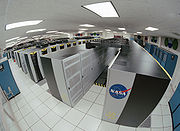
ابررایانهٔ کلمبیا در مرکز تحقیقات آمِس، ناسا

» مقدمه

در تاریخ بشر مثال های مکانیکی زیادی برای کامپیوتر ها وجود دارد ، اولین کامپیوتر های الکترونیکی در اواسط قرن بیستم بین سالهای (1940-1945) ساخته شدند . اندازه آنها بسیار بزرگ و به اندازه اتاق های بزرگ بودند و به اندازه صدها کامپیوتر امروزی برق مصرف می کردند. کامپیوتر های امروزی بر پایه مدارهای مجتمع پایه ریزی شده اند و میلیونها بار از کامپیوترهای اولیه سریعتر و کارآمدتر هستند و فضای بسیار کمی را نسبت به آنها اشغال می کنند . قابلیت ذخیره و بکارگیری عملی لیستی از برنامه ها (Programs) کامپیوترها را نسبت به ماشین حساب ها هوشمندتر ساخته است.


» تاریخچه محاسبه

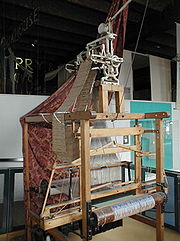
دستگاه بافندگی تصاویر بر روی پارچه ، که در موزه علوم و صنعت در منچستر انگلستان موجود است ،از اولین دستگاههای قابل برنامه ریزی است .

اولین استفاده از واژه کامپیوتر در سال 1316 ثبت گردید و به شخصی گفته می شد که محاسبات را انجام می داد ، و استفاده از این لغت ادامه پیدا کرد تا اواسط قرن بیستم و تا آن زمان گسترش یافت به ماشینی که محاسبات را انجام می دهد.

تاریخچه کامپیوترهای مدرن با 2تکنولوژی مجزا آغاز گردید یکی محاسبات اتوماتیک و دیگری قابلیت برنامه پذیری . نمونه اولیه از دستگاههای محاسبه مکانیکی , چرتکه ها هستند .خط کش های مهندسی و استرلاب و مکانیزم آنتیکثرا(که از 100-150 قبل از میلاد را تاریخ نگاری کرد)، و سیستم تئاتر الکساندارا که با کمک مکانیزم های اتوماتیک طنابی تا حدود 10 دقیقه با طبل نمایش می داد ، جوهره اصلی برنامه ریزی و محاسبات بودند.

ساعت کاخ(castle clock) یک ساعت نجومی بود که توسط "الجزیری" در سال 1206 اختراع گردید و به عنوان اولین کامپیوتر قابل برنامه ریزی آنالوگ شناخته شده است.این ساعت زودیاک(منطقه البروج) را نمایش می دهد ،مدارهای شمسی و قمری ،یک نشانگر هلال ماهی شکل از یک دروازه عبور می کند و باعث می شود درها به صورت اتوماتیک راس ساعت باز شوند و صدای زنگ به گوش برسد.

مخترع کامپیوترهایی که با برنامه کنترل می شدند "کنراد زئوس"( Konrad Zuse) است،که اولین کامپیوتر را در سال 1941 و دومی را بر پایه حافظه مغناطیسی در سال 1955 ساخت.

جورج استایبایتز(George Stibitz) به صورت بین المللی پدر کامپیوترهای دیجیتال است.زمانی که در نوومبر سال 1937در آزمایشگاه بل کار می کرد ,جورج یک ماشین حساب بر پایه یک رله داخلی را اختراع کرد که مدل K   "kitchen table" نام گرفت،که اولین ماشینی بود که از مدارات بایناری برای انجام محاسبات عملی ریاضی استفاده می کرد. مدل هایی که بعد از آن ابداع شدند با مهارت فرمولهای پیشرفته ریاضی را در خود جای دادند.

» طراحی CPU  و واحد کنترل

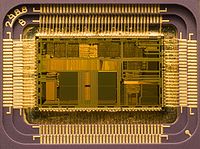
برشی از میکروپروسسور اینتل مدل 80486DX2 در اندازه واقعی 12*6.75 میلی متر

واحد کنترل (اغلب سیستم کنترل نامیده می شود یا کنترل مرکزی) بخش های مختلف کامپیوتر را مدیریت می نماید. این بخش دستورالعمل های برنامه را می خواند و مدیریت می کند ، و با تغییر آنها به یک سری سیگنالهای کنترل می تواند بخش های دیگر کامپیوتر را فعال یا غیر فعال نماید. بخش کنترل در کامپیوترهای پیشرفته می تواند دستورات را تغییر دهد در جهت بهبود کارآیی . یک بخش کلیدی در تمام CPU ها بخش شمارندهء برنامه است ،یک سلول حافظه مخصوص(Register) که نشان می دهد حافظهء بعدی که باید خوانده شود کدام است.

عملکرد سیستم های کنترلی به ترتیب زیر است ، و برخی از این گامها ممکن است با هم انجام گیرد یا با دستورات متفاوت انجام شوند که این مورد وابسته به نوع CPU می باشد.

1. خواندن کد برای عملکرد بعدی از بخش شمارنده

2. دیکود کردن کدهای عددی(بایناری یا هگز)به یک سری سیگنال برای دیگر سیستم ها

3. بالارفتن شماره کانتر برای دریافت دستور بعدی

4. خواندن این موضوع که آیا اطلاعات یا دستورالعمل باید از حافظه(یا یک دستگاه ورودی) خوانده شود ، و اینکه محل دیتای مورد نیاز کجا است.

5. تامین دیتای مورد نیاز برای یک ALU یا ریجیستر

6. اگر دستورالعمل به یک ALU یا یک سخت افزار نیاز دارد برای کامل شدن،به سخت افزار دستور بده تا عملکردهای مورد نظر انجام شوند.

7. نتایج را از ALU به حافظه یا ریجیستری برگردان و در یک دستگاه خروجی مثل مانیتور ثبت کن.

8. به مرحله اول برگرد

از آنجا که کانتر برنامه به صورت فکری فقط خانه بعدی حافظه را می خواند ،می توان از طریق محاسبات ALU آن را تغییر داد. به این طریق که 100 را به شمارنده برنامه می دهیم و باعث می شود که دستور بعدی از خانه 100 خوانده شود. عملکردهایی که شمارنده برنامه را تحت تاثیر قرار می دهند جامپ ها"jumps" نامیده می شوند و تکرار را ممکن می سازند و به کامپیوتر توان تکرار یک برنامه را می دهند که به آنها دستورات شرطی گفته می شود.


» واحد محاسبه و منطق

واحد ALU قادر است2 نوع عملکرد انجام دهد محاسباتی و منطقی.

بخش محاسباتی  ALU  محدود است به اعمال جمع و تفریق یا ضرب یا تقسیم و در کل مثلثات(سینوس،کسینوس و ...) . ALU  می تواند روی تمامی اعداد صحیح کار کند و برای انجام عملکردهای پیچیده به زمان بیشتری نیاز دارد. یک ALU همچنین می تواند اعداد را با هم مقایسه نماید و اندازه صحیح را بازگرداند(true or false) بسته به اینکه بزرگتر است یا کوچکتر است یا مساوی ، به صورت مثال: آیا 64 بزرگتر از 65 است ؟  غلط(false)

اعمال منطقی : و ,یا,آیا,نیست (AND, OR, XOR and NOT). اینها می توانند مفید باشند برای استفاده در بخش منطق سیستم و برای محاسبات سخت و پیشرفته منطق بولین .

کامپیوتر های سوپر اسکالر چندALU دارند و می توانند چندین دستورالعمل را در یک زمان انجام دهند. پردازنده های گرافیکی و کامپیوتر ها با قابلیت های SIMD و MIMD دارای ALUهایی هستند که محاسبات پیچیدهء  برداری و ماتریسی انجام می دهند.


» حافظه ها

در سال 1960 حافظهء اولیه مغناطیسی ابداء گردید ، تا زمانی که توسط حافظه های نیمه هادی جایگزین گردید. یک حافظهء کامپیوتر را می توان به صورت لیستی از سلولهای کنار هم دید که اعداد می توانند قرار بگیرند یا خوانده شوند ، هر سلول یک شماره مختص خود را دارد که آدرس نامیده می شود و می تواند یک عدد را در خود جای دهد. کامپیوتر می تواند به این صورت عمل کند که "عدد 123 را در خانه شماره 1357 قرار بده" یا "خانه شماره 1357 را با خانه شماره 2468 جمع کن و پاسخ را در خانه شماره 1595 قرار بده". اعداد ،الفباء و حتی دستورالعمل های کامپیوتر می توانند به راحتی در حافظه قرار بگیرند.از آنجا که CPU بین انواع مختلف اطلاعات تفاوت نمی گذارد ، این پاسخگویی نرم افزار است که به ما نشان می دهد در این خانه از حافظه چه چیزی ذخیره شده است.

در تمامی کامپیوتر های مدرن، هر خانه از حافظه به صورت بایناری ذخیره می شود و به صورت گروه های 8 تایی دسته بندی می شود که یک بایت نامیده می شود. هر بایت می تواند 256 عدد مختلف را بسازد  (2^8 = 256) و می تواند به صورت 0 تا 255 یا از -128 تا +128 قرار بگیرد. برای اعداد بزرگتر از چندین بایت پشت سر هم استفاده می شود البته به صورت (2,4,8).وقتی که به اعداد منفی نیاز داریم معمولا با یک مکمل ذخیره می شوند. یک کامپیوتر می تواند هر نوعی از اطلاعات را در حافظه ذخیره نماید البته اگر به اعداد بایناری تبدیل شوند. کامپیوترهای پیشرفته بیلیون ها یا حتی تریلیون ها بایت از اطلاعات دارند.

CPU بخش مخصوصی از حافظه(Register) را در خود دارد که بسیار سریعتر از حافظه های معمولی می توانند نوشته و خوانده شوند. آنها بسته به نوع CPU می توانند از چند تا چند صد تا در داخل یک CPU باشند. آنها برای دسترسی سریع CPU در نظر گرفته شده اند تا CPU کامپیوتر کارآیی بالاتری داشته باشد و بخش ALU محاسبات را سریعتر انجام دهد.

حافظه های اصلی کامپیوتر به 2 بخش کلی تقسیم می شوند 1- حافظه هایی با دسترسی تصادفی (RAM) و2- حافظه های فقط قابل خواندن(ROM) .

 RAM می تواند در هر زمان که CPU  دستور دهد نوشته و خوانده شود اما ROM ها از اطلاعات و نرم افزار های از قبل بارگیری شده پر شده اند و هیچ گاه قابل تغییر نیستند، بنابراین CPU فقط می تواند فقط از آن بخواند. ROM معمولا برای دستورالعمل هایی استفاده می شوند که کامپیوتر برای بالا آمدن از آنها استفاده می نماید. زمانی که کامپیوتر را خاموش می کنیم اطلاعات RAM  پاک می شوند ولی اطلاعات ROM  باقی می مانند.در یک کامپیوتر شخصی ROM شامل برنامه های مخصوص است که BIOS نامیده می شود که وظیفه دارد اطلاعات اولیه سیستم را بارگیری نماید و سیستم عامل را از روی هارد دیسک به رم بارگیری نماید هر زمان که کامپیوتر روشن یا ریست می شود.

در کامپیوترهای فشرده که دیسک درایو ندارند تمام اطلاعات در ROM ذخیره شده است. نرم افزاری که در ROM قرار دارد معمولا firmware نامیده می شود زیرا بیشتر شبیه به سخت افزار است تا نرم افزار. بلورهای فلش مموری تمایز بین ROM  و    RAM است ، وقتی که خاموش می شود اطلاعات آن باقی می ماند اما باز هم می توان روی آن نوشت. در نوع خود کندتر از ROM  و ROM   است اما در مواردی که سرعت زیاد نیاز نیست بسیار مفید است.

در اغلب کامپیوتر های پیشرفته تعداد بیشتری رم وجود دارند که از ریجیسترها کندتر و از حافظه های اصلی سریعتر هستند.

» ورودی و خروجی ها

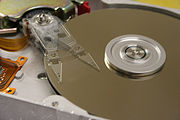
هارد دیسک ها حافظه های عمومی هستند که در کامپیوترها استفاده می شوند.  I/Oبه این معنی است که کامپیوتر چگونه با دنیای اطراف خود تبادل اطلاعات می نماید . دستگاههایی که ورودی و خروجی کامپیوتر را تامین می کنند دستگاههای جانبی نامیده می شوند. در یک کامپیوتر شخصی(PC)دستگاههای جانبی شامل ورودی ها هستند از قبیل : کیبرد و موس و دستگاههای خروجی از قبیل مانیتور و پرینتر .

هارد دیسک ها،فلاپی درایو ها و دیسک های نوری هم به عنوان ورودی و هم به عنوان خروجی به حساب می آیند. شبکه های کامپیوتری نیز از انواع دیگر ورودی و خروجی ها هستند.

اغلب دستگاههای جانبی ، خود کامپیوترهای پیچیده ای هستند که در داخل خودشان CPU و حافظه دارند. یک واحد پردازش تصویر (GPU) ممکن است از 50 یا تعداد بیشتری کامپیوتر کوچک تشکیل شده باشد که محاسبات سنگین سه بعدی لازم جهت نمایش تصویرهای سنگین گرافیکی را انجام می دهد. کامپیوترهای مدرن خانگی شامل کامپیوترهای داخلی زیادی می شوند که به CPU اصلی کمک می کنند تا ورودی و خروجی را بهتر اداره نماید.  


منبع: سایت علمی ویکیپدیا


Computer

A computer is a machine that manipulates data according to a set of instructions.


The Columbia Supercomputer, located at the NASA Ames Research Center.


Although mechanical examples of computers have existed through much of recorded human history, the first electronic computers were developed in the mid-20th century (1940–1945). These were the size of a large room, consuming as much power as several hundred modern personal computers (PCs). Modern computers based on integrated circuits are millions to billions of times more capable than the early machines, and occupy a fraction of the space.Simple computers are small enough to fit into a wristwatch, and can be powered by a watch battery. Personal computers in their various forms are icons of the Information Age and are what most people think of as "computers". The embedded computers found in many devices from MP3 players to fighter aircraft and from toys to industrial robots are however the most numerous.


The ability to store and execute lists of instructions called programs makes computers extremely versatile, distinguishing them from calculators. The Church–Turing thesis is a mathematical statement of this versatility: any computer with a certain minimum capability is, in principle, capable of performing the same tasks that any other computer can perform. Therefore computers ranging from a mobile phone to a supercomputer are all able to perform the same computational tasks, given enough time and storage capacity.


History of computing

The Jacquard loom, on display at the Museum of Science and Industry in Manchester, England, was one of the first programmable devices.The first use of the word "computer" was recorded in 1613, referring to a person who carried out calculations, or computations, and the word continued to be used in that sense until the middle of the 20th century. From the end of the 19th century onwards though, the word began to take on its more familiar meaning, describing a machine that carries out computations.


The history of the modern computer begins with two separate technologies—automated calculation and programmability—but no single device can be identified as the earliest computer, partly because of the inconsistent application of that term. Examples of early mechanical calculating devices include the abacus, the slide rule and arguably the astrolabe and the Antikythera mechanism (which dates from about 150–100 BC). Hero of Alexandria (c. 10–70 AD) built a mechanical theater which performed a play lasting 10 minutes and was operated by a complex system of ropes and drums that might be considered to be a means of deciding which parts of the mechanism performed which actions and when.This is the essence of programmability.


The "castle clock", an astronomical clock invented by Al-Jazari in 1206, is considered to be the earliest programmable analog computer.It displayed the zodiac, the solar and lunar orbits, a crescent moon-shaped pointer travelling across a gateway causing automatic doors to open every hour,and five robotic musicians who played music when struck by levers operated by a camshaft attached to a water wheel. The length of day and night could be re-programmed to compensate for the changing lengths of day and night throughout the year.


The Renaissance saw a re-invigoration of European mathematics and engineering. Wilhelm Schickard's 1623 device was the first of a number of mechanical calculators constructed by European engineers, but none fit the modern definition of a computer, because they could not be programmed.


In 1801, Joseph Marie Jacquard made an improvement to the textile loom by introducing a series of punched paper cards as a template which allowed his loom to weave intricate patterns automatically. The resulting Jacquard loom was an important step in the development of computers because the use of punched cards to define woven patterns can be viewed as an early, albeit limited, form of programmability.


It was the fusion of automatic calculation with programmability that produced the first recognizable computers. In 1837, Charles Babbage was the first to conceptualize and design a fully programmable mechanical computer, his analytical engine.Limited finances and Babbage's inability to resist tinkering with the design meant that the device was never completed.


In the late 1880s, Herman Hollerith invented the recording of data on a machine readable medium. Prior uses of machine readable media, above, had been for control, not data. "After some initial trials with paper tape, he settled on punched cards ..." To process these punched cards he invented the tabulator, and the keypunch machines. These three inventions were the foundation of the modern information processing industry. Large-scale automated data processing of punched cards was performed for the 1890 United States Census by Hollerith's company, which later became the core of IBM. By the end of the 19th century a number of technologies that would later prove useful in the realization of practical computers had begun to appear: the punched card, Boolean algebra, the vacuum tube (thermionic valve) and the teleprinter.


During the first half of the 20th century, many scientific computing needs were met by increasingly sophisticated analog computers, which used a direct mechanical or electrical model of the problem as a basis for computation. However, these were not programmable and generally lacked the versatility and accuracy of modern digital computers.


Alan Turing is widely regarded to be the father of modern computer science. In 1936 Turing provided an influential formalisation of the concept of the algorithm and computation with the Turing machine. Of his role in the modern computer, Time magazine in naming Turing one of the 100 most influential people of the 20th century, states: "The fact remains that everyone who taps at a keyboard, opening a spreadsheet or a word-processing program, is working on an incarnation of a Turing machine".


The inventor of the program-controlled computer was Konrad Zuse, who built the first working computer in 1941 and later in 1955 the first computer based on magnetic storage.


George Stibitz is internationally recognized as a father of the modern digital computer. While working at Bell Labs in November 1937, Stibitz invented and built a relay-based calculator he dubbed the "Model K" (for "kitchen table", on which he had assembled it), which was the first to use binary circuits to perform an arithmetic operation. Later models added greater sophistication including complex arithmetic and programmability.

CPU design and Control unit

Die of an Intel 80486DX2 microprocessor (actual size: 12×6.75 mm) in its packaging.


Diagram showing how a particular MIPS architecture instruction would be decoded by the control system.The control unit (often called a control system or central controller) manages the computer's various components; it reads and interprets (decodes) the program instructions, transforming them into a series of control signals which activate other parts of the computer.Control systems in advanced computers may change the order of some instructions so as to improve performance.


A key component common to all CPUs is the program counter, a special memory cell (a register) that keeps track of which location in memory the next instruction is to be read from.


The control system's function is as follows—note that this is a simplified description, and some of these steps may be performed concurrently or in a different order depending on the type of CPU:


1.Read the code for the next instruction from the cell indicated by the program counter.

2.Decode the numerical code for the instruction into a set of commands or signals for each of the other systems.

3.Increment the program counter so it points to the next instruction.

4.Read whatever data the instruction requires from cells in memory (or perhaps from an input device). The location of this required data is typically stored within the instruction code.

5.Provide the necessary data to an ALU or register.

6.If the instruction requires an ALU or specialized hardware to complete, instruct the hardware to perform the requested operation.

7.Write the result from the ALU back to a memory location or to a register or perhaps an output device.

8.Jump back to step.

Since the program counter is (conceptually) just another set of memory cells, it can be changed by calculations done in the ALU. Adding 100 to the program counter would cause the next instruction to be read from a place 100 locations further down the program. Instructions that modify the program counter are often known as "jumps" and allow for loops (instructions that are repeated by the computer) and often conditional instruction execution (both examples of control flow).


It is noticeable that the sequence of operations that the control unit goes through to process an instruction is in itself like a short computer program—and indeed, in some more complex CPU designs, there is another yet smaller computer called a microsequencer that runs a microcode program that causes all of these events to happen.


Arithmetic / logic unit (ALU)

The ALU is capable of performing two classes of operations: arithmetic and logic.


The set of arithmetic operations that a particular ALU supports may be limited to adding and subtracting or might include multiplying or dividing, trigonometry functions (sine, cosine, etc) and square roots. Some can only operate on whole numbers (integers) whilst others use floating point to represent real numbers—albeit with limited precision. However, any computer that is capable of performing just the simplest operations can be programmed to break down the more complex operations into simple steps that it can perform. Therefore, any computer can be programmed to perform any arithmetic operation—although it will take more time to do so if its ALU does not directly support the operation. An ALU may also compare numbers and return boolean truth values (true or false) depending on whether one is equal to, greater than or less than the other ("is 64 greater than 65?").


Logic operations involve Boolean logic: AND, OR, XOR and NOT. These can be useful both for creating complicated conditional statements and processing boolean logic.


Superscalar computers may contain multiple ALUs so that they can process several instructions at the same time.Graphics processors and computers with SIMD and MIMD features often provide ALUs that can perform arithmetic on vectors and matrices.


Memory and Computer data storage

 Magnetic core memory was the computer memory of choice throughout the 1960s, until it was replaced by semiconductor memory.A computer's memory can be viewed as a list of cells into which numbers can be placed or read. Each cell has a numbered "address" and can store a single number. The computer can be instructed to "put the number 123 into the cell numbered 1357" or to "add the number that is in cell 1357 to the number that is in cell 2468 and put the answer into cell 1595". The information stored in memory may represent practically anything. Letters, numbers, even computer instructions can be placed into memory with equal ease. Since the CPU does not differentiate between different types of information, it is the software's responsibility to give significance to what the memory sees as nothing but a series of numbers.


In almost all modern computers, each memory cell is set up to store binary numbers in groups of eight bits (called a byte). Each byte is able to represent 256 different numbers (2^8 = 256); either from 0 to 255 or -128 to +127. To store larger numbers, several consecutive bytes may be used (typically, two, four or eight). When negative numbers are required, they are usually stored in two's complement notation. Other arrangements are possible, but are usually not seen outside of specialized applications or historical contexts. A computer can store any kind of information in memory if it can be represented numerically. Modern computers have billions or even trillions of bytes of memory.


The CPU contains a special set of memory cells called registers that can be read and written to much more rapidly than the main memory area. There are typically between two and one hundred registers depending on the type of CPU. Registers are used for the most frequently needed data items to avoid having to access main memory every time data is needed. As data is constantly being worked on, reducing the need to access main memory (which is often slow compared to the ALU and control units) greatly increases the computer's speed.


Computer main memory comes in two principal varieties: random-access memory or RAM and read-only memory or ROM. RAM can be read and written to anytime the CPU commands it, but ROM is pre-loaded with data and software that never changes, so the CPU can only read from it. ROM is typically used to store the computer's initial start-up instructions. In general, the contents of RAM are erased when the power to the computer is turned off, but ROM retains its data indefinitely. In a PC, the ROM contains a specialized program called the BIOS that orchestrates loading the computer's operating system from the hard disk drive into RAM whenever the computer is turned on or reset. In embedded computers, which frequently do not have disk drives, all of the required software may be stored in ROM. Software stored in ROM is often called firmware, because it is notionally more like hardware than software. Flash memory blurs the distinction between ROM and RAM, as it retains its data when turned off but is also rewritable. It is typically much slower than conventional ROM and RAM however, so its use is restricted to applications where high speed is unnecessary.


In more sophisticated computers there may be one or more RAM cache memories which are slower than registers but faster than main memory. Generally computers with this sort of cache are designed to move frequently needed data into the cache automatically, often without the need for any intervention on the programmer's part.


Input/output (I/O)

Hard disk drives are common storage devices used with computers.I/O is the means by which a computer exchanges information with the outside world. Devices that provide input or output to the computer are called peripherals.On a typical personal computer, peripherals include input devices like the keyboard and mouse, and output devices such as the display and printer. Hard disk drives, floppy disk drives and optical disc drives serve as both input and output devices. Computer networking is another form of I/O.


Often, I/O devices are complex computers in their own right with their own CPU and memory. A graphics processing unit might contain fifty or more tiny computers that perform the calculations necessary to display 3D graphics[citation needed]. Modern desktop computers contain many smaller computers that assist the main CPU in performing I/O.


برای دریافت مقاله به صورت فایل زیپ روی لینک بالا کلیک کنید.


ادامه نوشته